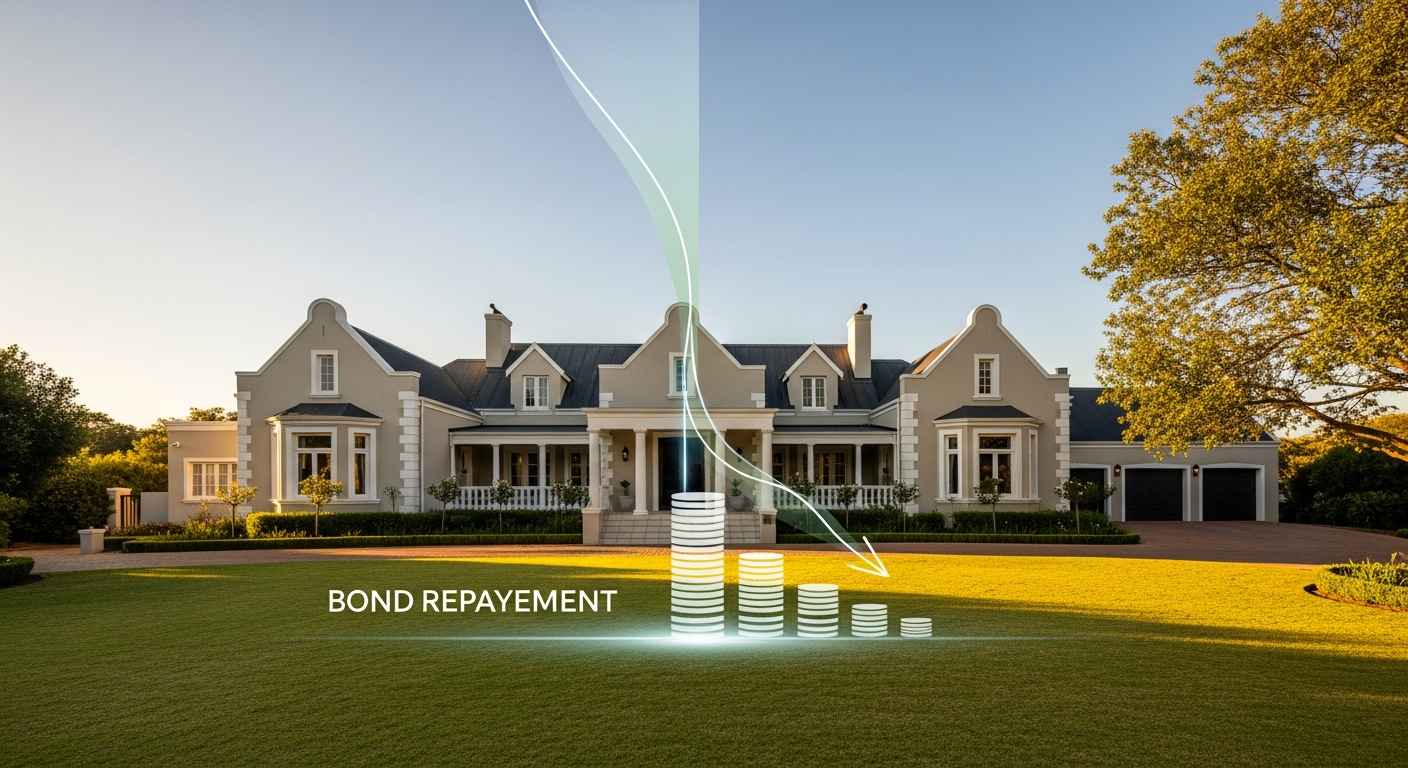

Understanding 2026 interest rate impacts is crucial for SA property buyers. This guide details how SARB decisions will shape affordability and the broader property market.
As South Africa moves closer to 2026, the question of how interest rates will shape the property market remains a critical concern for prospective buyers and investors alike. The economic landscape is ever-evolving, and the decisions made by the South African Reserve Bank (SARB) have a direct and significant impact on the financial viability of homeownership. At Elsja Properties, we understand that navigating these complexities requires informed insight. This comprehensive guide will delve into the data-driven market trends, provide essential price analysis, and offer the necessary economic context to help you prepare for property purchasing in 2026. We aim to equip you with the knowledge to make confident, strategic decisions in a dynamic real estate environment.
The SARB's Stance on Interest Rates for 2026 and Beyond
The South African Reserve Bank (SARB) plays a pivotal role in dictating the national interest rate environment, primarily through its manipulation of the repo rate. For 2026, the SARB's Monetary Policy Committee (MPC) will continue its mandate of maintaining price stability in the interest of sustainable economic growth. Their decisions are not made in a vacuum but are carefully considered against a backdrop of local and global economic indicators. Inflation targeting remains a cornerstone of their strategy; if inflation is persistently high, it's likely they will maintain a hawkish stance, keeping interest rates elevated to curb price increases. Conversely, a prolonged period of low inflation and sluggish economic growth might prompt rate cuts to stimulate borrowing and investment.
Predicting the exact trajectory of the repo rate for 2026 is challenging, given the multitude of variables at play. However, forward guidance from the SARB, economic forecasts by institutions like the IMF and World Bank, and domestic fiscal policy decisions will offer strong clues. Buyers need to be vigilant, monitoring economic news and expert analyses closely. Changes in global commodity prices, geopolitical events, and the strength of major trading partners' economies (like China and Europe) will also indirectly influence the SARB's policy, affecting the overall property market. Preparing for various rate scenarios is a prudent approach for any serious buyer.
Factors Influencing the Repo Rate
- Inflation Expectations: The primary driver for SARB policy. If inflation is expected to remain outside the 3-6% target band, rate adjustments are highly probable.
- Economic Growth: Weak GDP growth often encourages rate cuts to boost economic activity, while robust growth might allow for normalisation.
- Rand Exchange Rate: A volatile or depreciating rand can fuel inflation through import costs, pressuring the SARB to act.
- Global Monetary Policy: Decisions by major central banks (e.g., US Federal Reserve, ECB) can impact capital flows and, consequently, SARB policy.
- Fiscal Policy: Government spending and borrowing levels can influence market confidence and inflationary pressures.
Decoding Home Loan Affordability in a Changing Rate Landscape
The most direct impact of SARB's interest rates on property buyers is felt in home loan affordability. The repo rate directly influences the prime lending rate, which is the benchmark rate commercial banks use for home loans. Even a small increase in the prime rate can significantly alter monthly bond repayments, especially for larger loan amounts. For instance, a 1% rise in the prime rate could add thousands to a standard 20-year bond repayment, potentially pushing aspiring homeowners out of their desired price bracket. Understanding this relationship is fundamental to budgeting effectively for a property purchase in 2026.
Buyers should not only consider the current prime rate but also model various scenarios. Banks typically assess affordability based on a percentage of your gross income, usually around 30%. When interest rates are high, this percentage can be reached much faster, meaning you qualify for a smaller loan. It's crucial to factor in potential rate increases over the lifetime of your loan, particularly if you opt for a variable interest rate. Fixed-rate options, while sometimes slightly higher initially, offer stability against future rate hikes, providing peace of mind. Getting pre-approved for a home loan well in advance can give you a clearer picture of your maximum affordability and solidify your negotiating power in the property market.
Calculating Your Potential 2026 Bond Repayments
To estimate your monthly repayments and understand your true affordability, consider these steps:
- Determine Potential Prime Rate: Based on economic forecasts for 2026, estimate a likely prime lending rate.
- Factor in Your Loan Margin: Banks usually offer prime minus/plus a certain percentage based on your credit profile.
- Use an Online Bond Calculator: Input your desired loan amount, the estimated interest rate, and a 20-year repayment term.
- Account for Additional Costs: Remember transfer duties, legal fees, bond registration fees, and municipal rates & taxes. These significantly add to the initial outlay.
- Stress Test Your Budget: Calculate repayments at 1% and 2% higher than your estimated rate to ensure you can still comfortably afford it if rates rise.
Property Market Trends: Prices and Demand Under Rate Pressure
The trajectory of interest rates directly influences the broader property market, impacting both demand and property values. When rates are high, borrowing becomes more expensive, leading to a decrease in buyer demand. Fewer buyers competing for properties typically results in slower price growth, or even price corrections in some segments. Conversely, a sustained period of lower interest rates tends to stimulate demand, making homeownership more accessible and driving up property prices due to increased competition. The 2026 market will likely reflect the cumulative effect of the SARB's monetary policy decisions leading up to that year.
In segments where demand is highly elastic – such as luxury properties or secondary investment properties – the impact of rate fluctuations can be more pronounced. First-time buyers, who are often most sensitive to affordability changes, might also scale back their aspirations or delay purchases if rates remain elevated. Data from property analytics firms often indicates a lag effect, meaning changes in interest rates might take several months to fully manifest in sales volumes and price movements. While a robust property market can sometimes absorb higher rates, a prolonged period of high rates combined with stagnant economic growth could put significant downward pressure on property values. It's crucial for buyers to monitor these market indicators, understanding that regional nuances can create variations even within the national trend.
Regional Spotlight: Centurion's Property Outlook
Centurion, situated strategically between Johannesburg and Pretoria, offers a unique microcosm of the broader Gauteng property market. Its appeal often stems from its convenient location, diverse housing stock, and numerous amenities. While national interest rate trends will undeniably influence Centurion, local factors such as continued infrastructural development, commercial investment, and the migration patterns of professionals and families will play a crucial role. Areas within Centurion experiencing high demand, such as secure estates or properties near popular business hubs, may show greater resilience to interest rate pressures, maintaining or even modestly growing values. Conversely, areas with an oversupply or less desirability might see more significant price adjustments. At Elsja Properties, we provide granular insights into Centurion's market to help you make hyper-localised decisions.
Strategies for Navigating 2026's Interest Rate Environment
Approaching the 2026 property market requires a strategic mindset, especially concerning home loan affordability. Firstly, securing a pre-qualification or pre-approval for a home loan is paramount. This process, ideally done with a reputable mortgage originator, gives you a realistic assessment of what you can afford and signals your seriousness to sellers. It's also wise to consider the trade-offs between fixed-rate and variable-rate home loans. A fixed rate offers stability, protecting you from future interest rate hikes, but might be slightly higher than the initial variable rate. A variable rate, while potentially cheaper initially, exposes you to the risk of increased monthly payments if the SARB raises the repo rate.
Secondly, focusing on improving your credit score and reducing existing debt will make you a more attractive borrower, potentially securing you a better interest rate from banks. A strong credit profile often translates to a lower interest rate margin above prime. Furthermore, aiming for a larger deposit can significantly reduce your loan amount, thereby lowering your overall repayment burden and making you less susceptible to interest rate fluctuations. Financial planning, including stress-testing your budget against potential rate increases, is not just a suggestion but a necessity. By proactively implementing these strategies, buyers can mitigate risks and position themselves strongly in the competitive 2026 property market.
Proactive Steps for Future Property Buyers
- Boost Your Savings: Accumulate a substantial deposit to reduce your loan amount and interest exposure.
- Improve Credit Health: Pay off debts, ensure timely payments, and regularly check your credit report for accuracy.
- Budget for All Costs: Beyond the bond, factor in transfer duty, legal fees, bond registration, and ongoing municipal rates and levies.
- Research Market Trends: Stay informed about local and national property market data and economic forecasts.
- Seek Professional Advice: Engage with trusted mortgage originators and real estate experts like Elsja Properties for tailored guidance.
Economic Indicators & Their Influence on SA Property
Beyond the direct influence of the SARB repo rate, a broader spectrum of economic indicators profoundly shapes the South African property market. Gross Domestic Product (GDP) growth, for instance, reflects the overall health and expansion of the economy. A stronger economy generally leads to higher employment rates, increased consumer confidence, and greater disposable income, all of which fuel housing demand and support property values. Conversely, sluggish GDP growth or recessionary conditions can dampen buyer sentiment, reduce affordability, and lead to subdued market activity.
Unemployment rates are another critical factor. High unemployment directly reduces the pool of potential buyers and can even force existing homeowners to sell, potentially increasing supply and putting downward pressure on prices. Consumer confidence surveys offer a forward-looking perspective, indicating whether households feel secure enough in their financial futures to undertake large investments like property. Furthermore, South Africa's fiscal health, including government debt levels and budget deficits, influences investor confidence and can affect the stability of the rand, which in turn impacts inflation and SARB decisions. Global economic trends, such as interest rate movements in major economies or shifts in commodity prices, also exert a significant pull, affecting capital flows and investment in the local property sector. Understanding these interconnected factors provides a holistic view for anyone planning a purchase in 2026.
Global Economic Spillovers
The South African economy is inextricably linked to global economic performance. For 2026, potential global recessions, trade wars, or shifts in major central bank policies (like the US Federal Reserve's interest rate path) could have significant spillovers. A stronger US dollar, for example, can weaken the Rand, making imports more expensive and contributing to domestic inflation, which might compel the SARB to maintain higher interest rates. This interconnectedness means that South African property buyers must keep an eye not just on local news, but also on international economic developments.
Q: What will be the biggest factor affecting SA property prices in 2026?
A: The biggest factor affecting South African property prices in 2026 will likely be the trajectory of the SARB's interest rates, specifically the repo rate. Higher rates dampen affordability and buyer demand, while lower rates can stimulate the market and support price growth. Other key influences include economic growth and consumer confidence.
Q: How do interest rates impact my home loan affordability in Centurion?
A: Interest rates directly impact your home loan affordability in Centurion by determining your monthly bond repayments. Higher rates mean higher repayments for the same loan amount, reducing the maximum loan you qualify for based on your income. This directly influences the property value you can realistically afford in the Centurion market.
Q: Should I choose a fixed or variable interest rate for my 2026 home loan?
A: Choosing between a fixed or variable interest rate for your 2026 home loan depends on your risk tolerance and rate outlook. A fixed rate offers repayment stability, protecting you from future hikes, but might be higher initially. A variable rate could be cheaper initially but exposes you to potential increases if the SARB raises rates.
Q: What economic indicators should SA property buyers watch for in 2026?
A: South African property buyers in 2026 should closely watch key economic indicators such as the SARB repo rate, inflation figures, GDP growth rates, and unemployment data. Consumer confidence indices and the rand's exchange rate against major currencies will also provide valuable insights into market health and future trends.
Q: Will property prices in Centurion go up or down in 2026?
A: Whether property prices in Centurion go up or down in 2026 will depend on various factors. While national interest rate trends will play a role, local demand (driven by factors like new developments and amenities), economic growth in Gauteng, and supply levels will also significantly influence price movements in Centurion.
The South African property market in 2026 will undoubtedly present both opportunities and challenges, with interest rates playing a central role in shaping its trajectory. Navigating this landscape successfully requires diligent research, proactive financial planning, and expert guidance. Understanding the SARB's mandate, decoding home loan affordability, and staying abreast of broader economic indicators are crucial steps for any prospective buyer. The data-driven insights and strategic approaches discussed here are designed to empower you to make well-informed decisions.
Whether you're a first-time buyer or a seasoned investor, the complexities of the 2026 property market demand a partner who understands the nuances of the South African real estate landscape. At Elsja Properties (elsjaprop.co.za), we are committed to providing you with personalised advice, detailed market analysis, and access to the best properties in Centurion and beyond. Don't navigate the future alone – contact Elsja Properties today to discuss your property aspirations for 2026 and secure your dream home or investment.